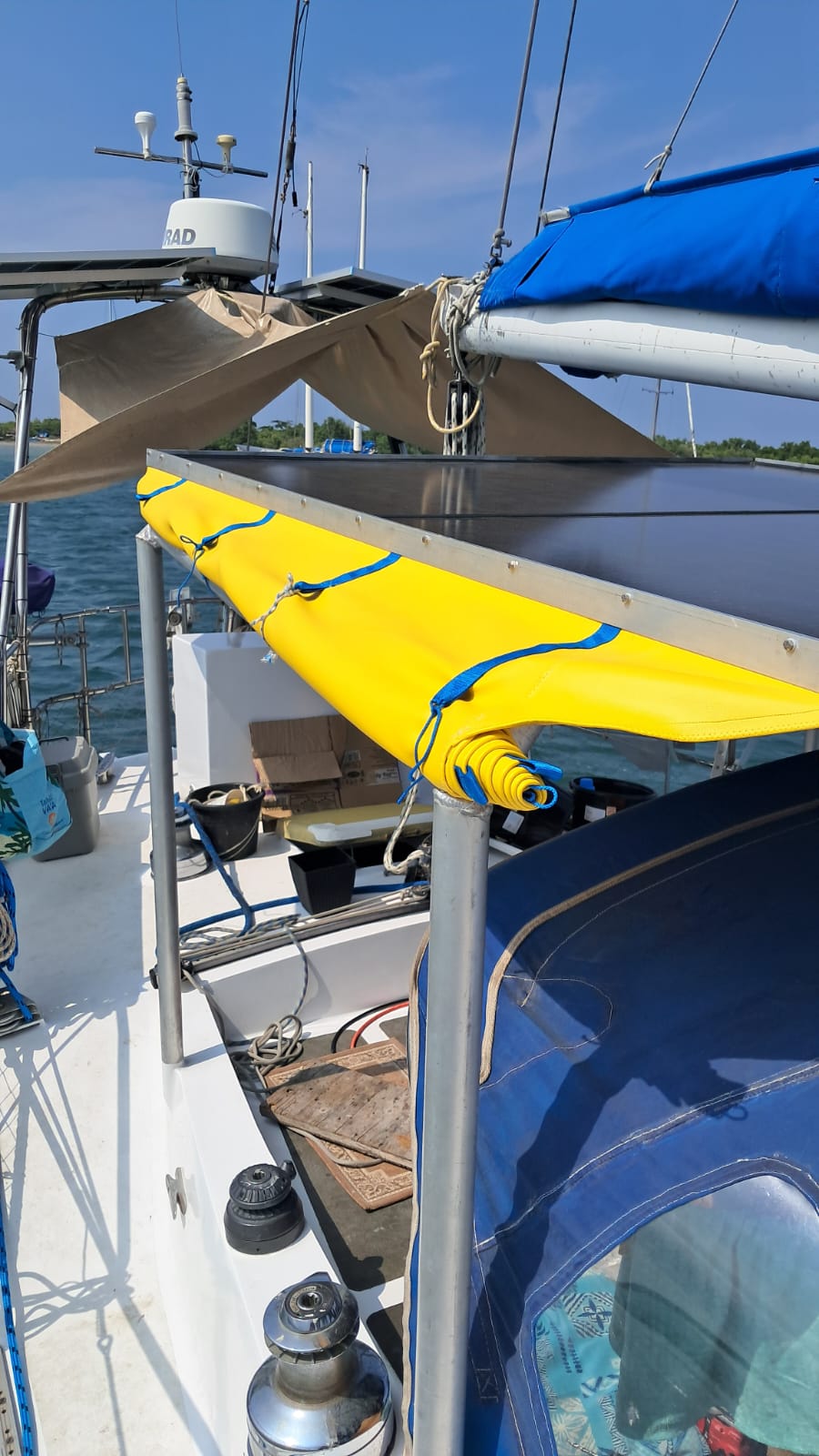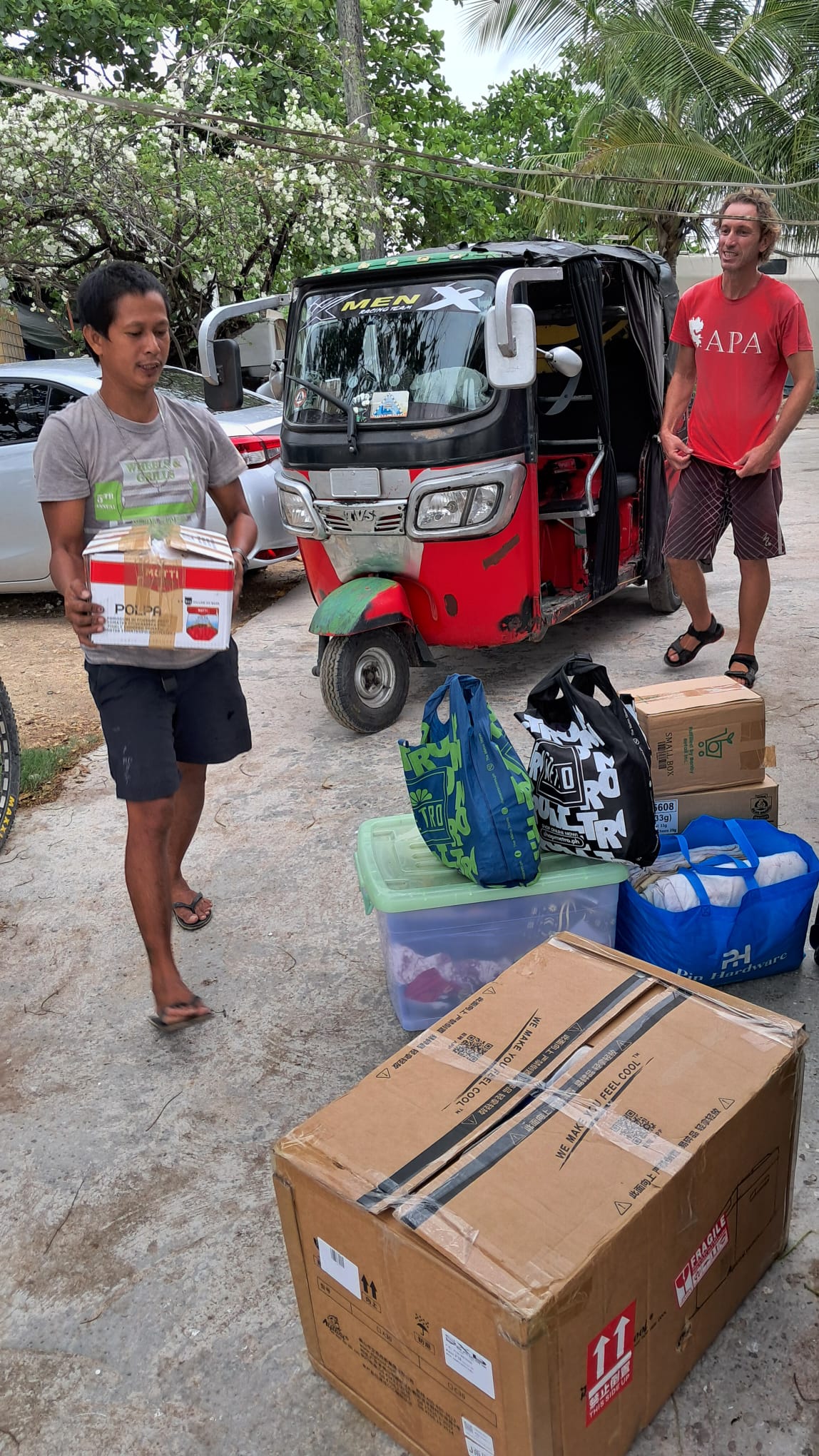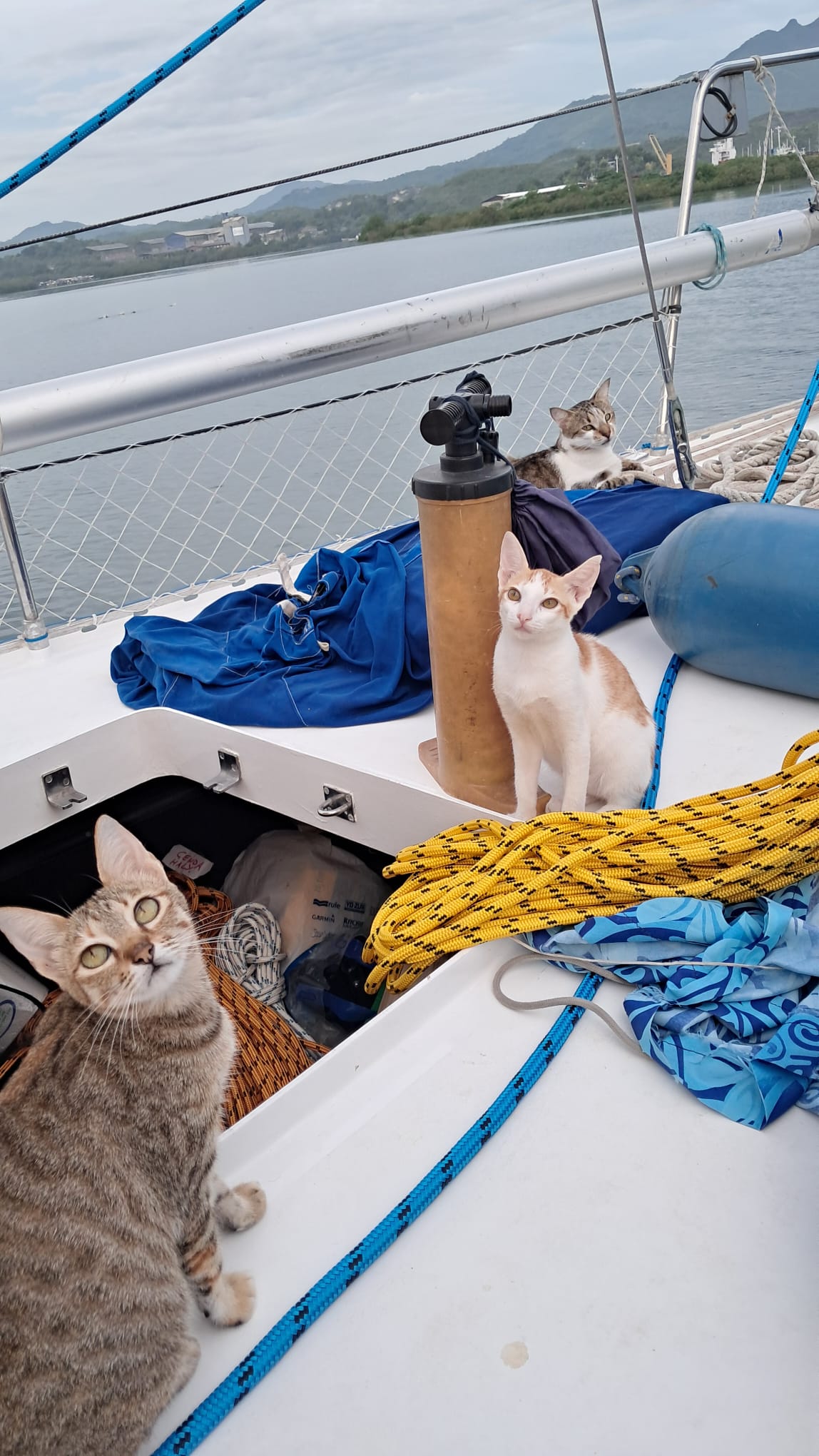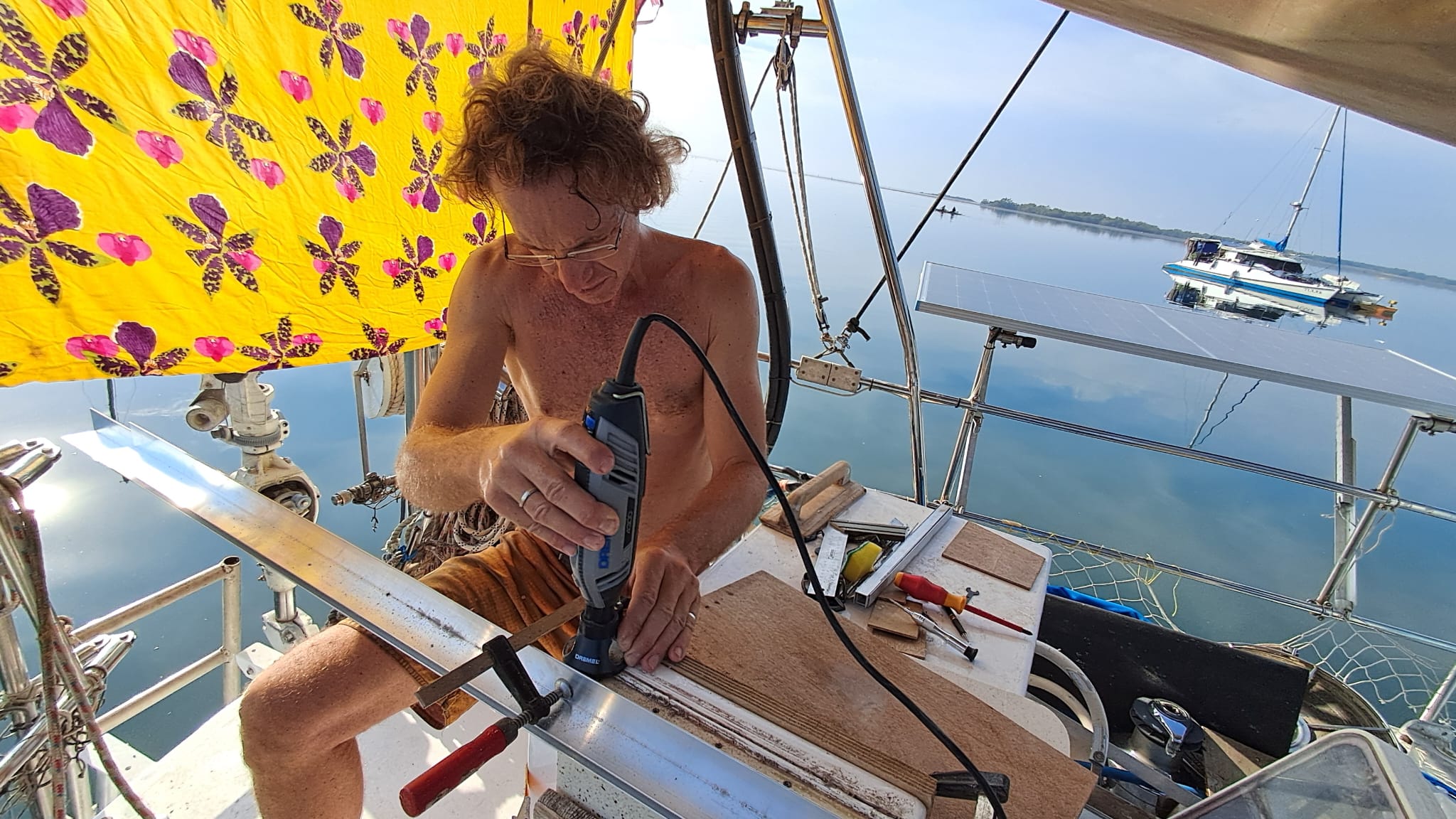


We were finally out of Carmen lagoon, enjoying being out in clear waters, the cats were doing great, were neither afraid of motoring nor sailing and we were so happy to be finally underway to Borneo (Malaysia). When the AIS stopped working we fixed it, when the watermaker stopped working we changed the membranes, but then the engine started leaking oil and we got very concerned–Christian can fix most things on board, but he isn’t a professional mechanic, plus we don’t carry all parts, so we considered heading back to Carmen and the mechanic, who had just done a 5000 hour service on our Yanmar.
On Saturday evening we were out in the evening on deck with all three cats playing chase and hide and seek, then we went to bed and had a quiet night at anchor, but in the morning something was odd: Minnie hopped on the bed to wake us for breakfast, Smurfy was waiting for me in the galley, but no Squeak to be seen–and he’s usually the first one to squeak for breakfast. Suddenly anxious I started calling–nothing. I raced around the boat from cabin to cabin–no Squeak. Out on deck, getting desperate now, shouting, screaming his name–still nothing. I thought he had gone overboard during the night. In full panic mode now we did another search around the boat and this time we found him: curled up behind a sail in the forecabin. He tried to get up, but fell over again, his left hindleg giving no support.
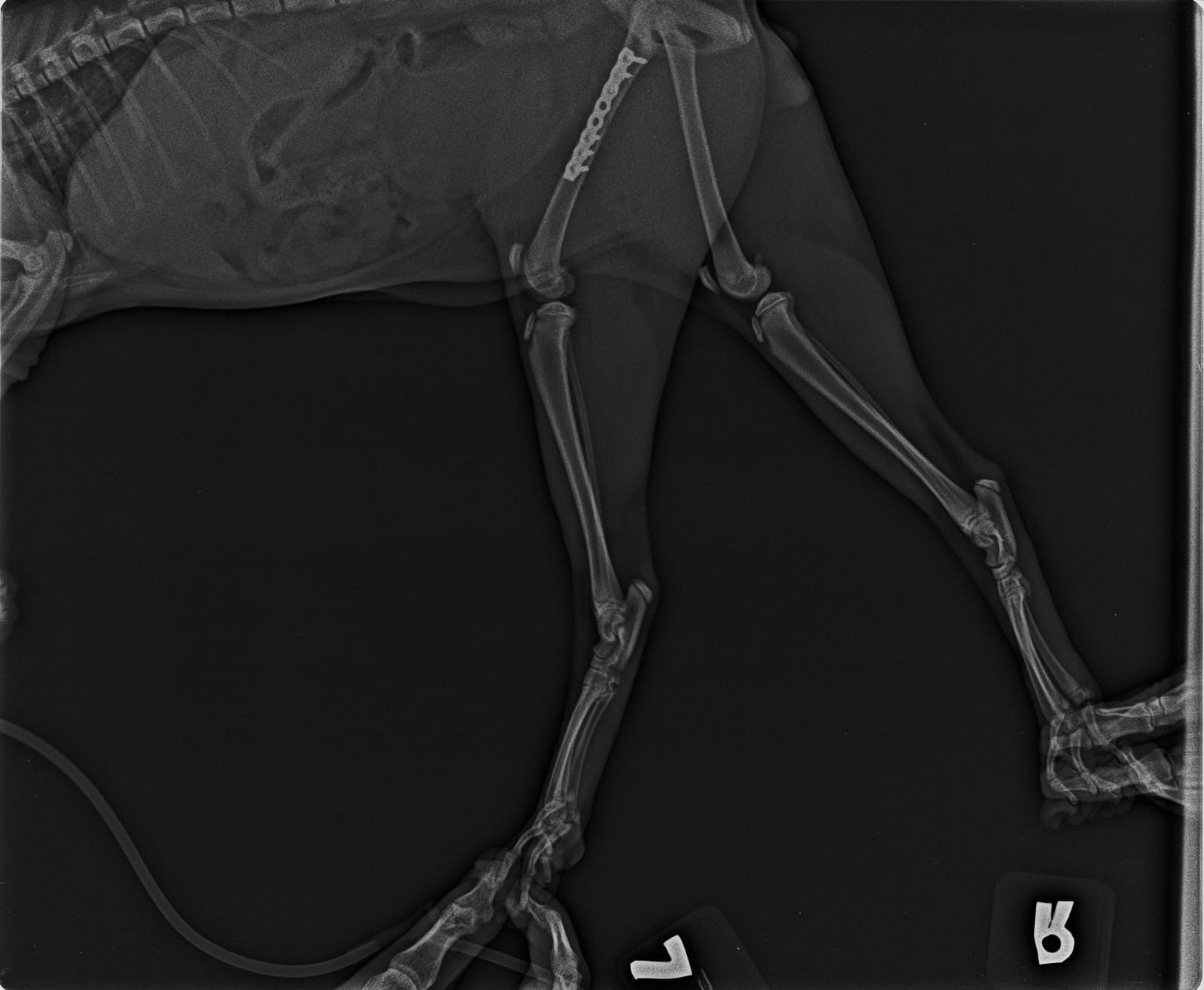
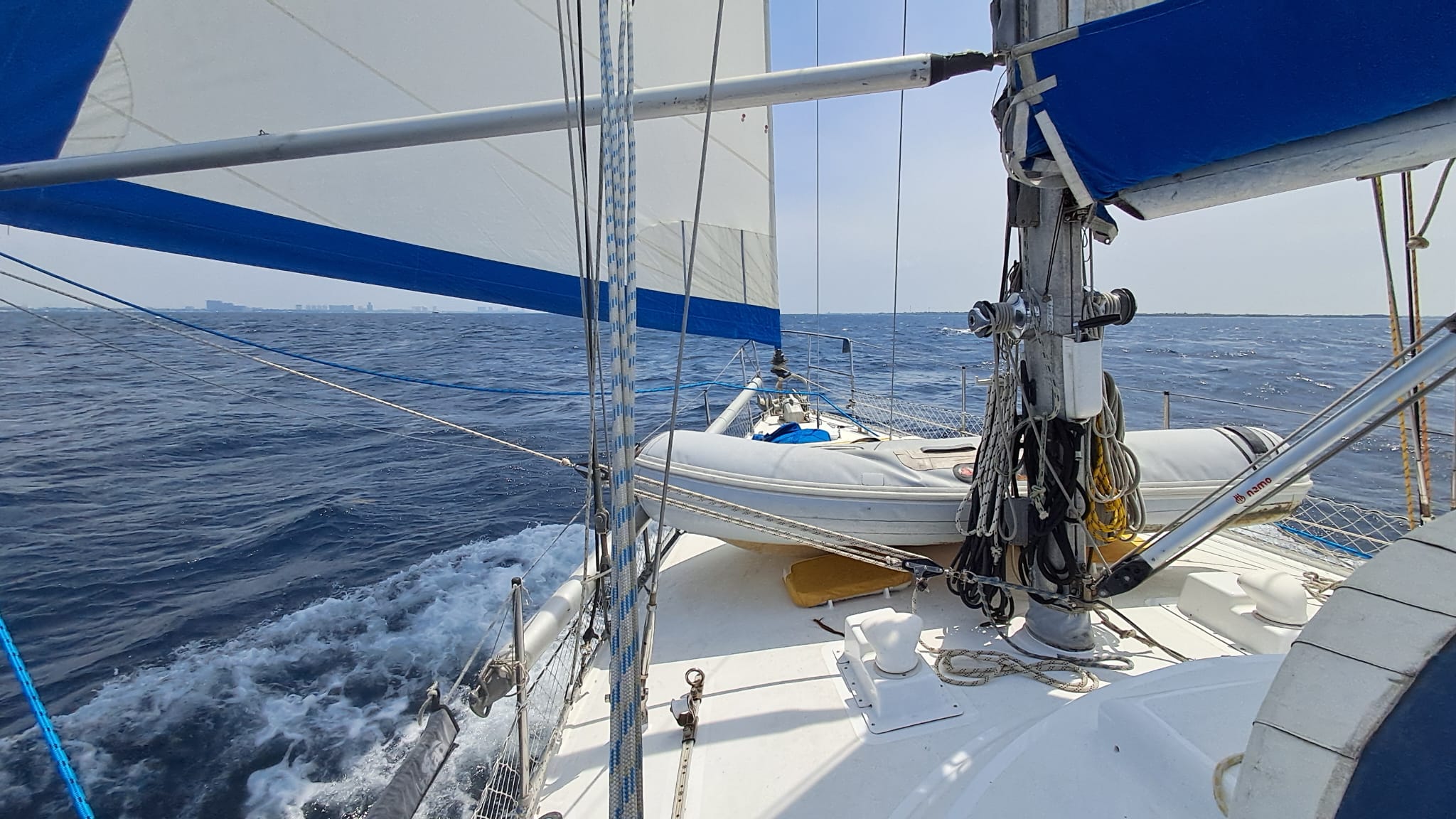
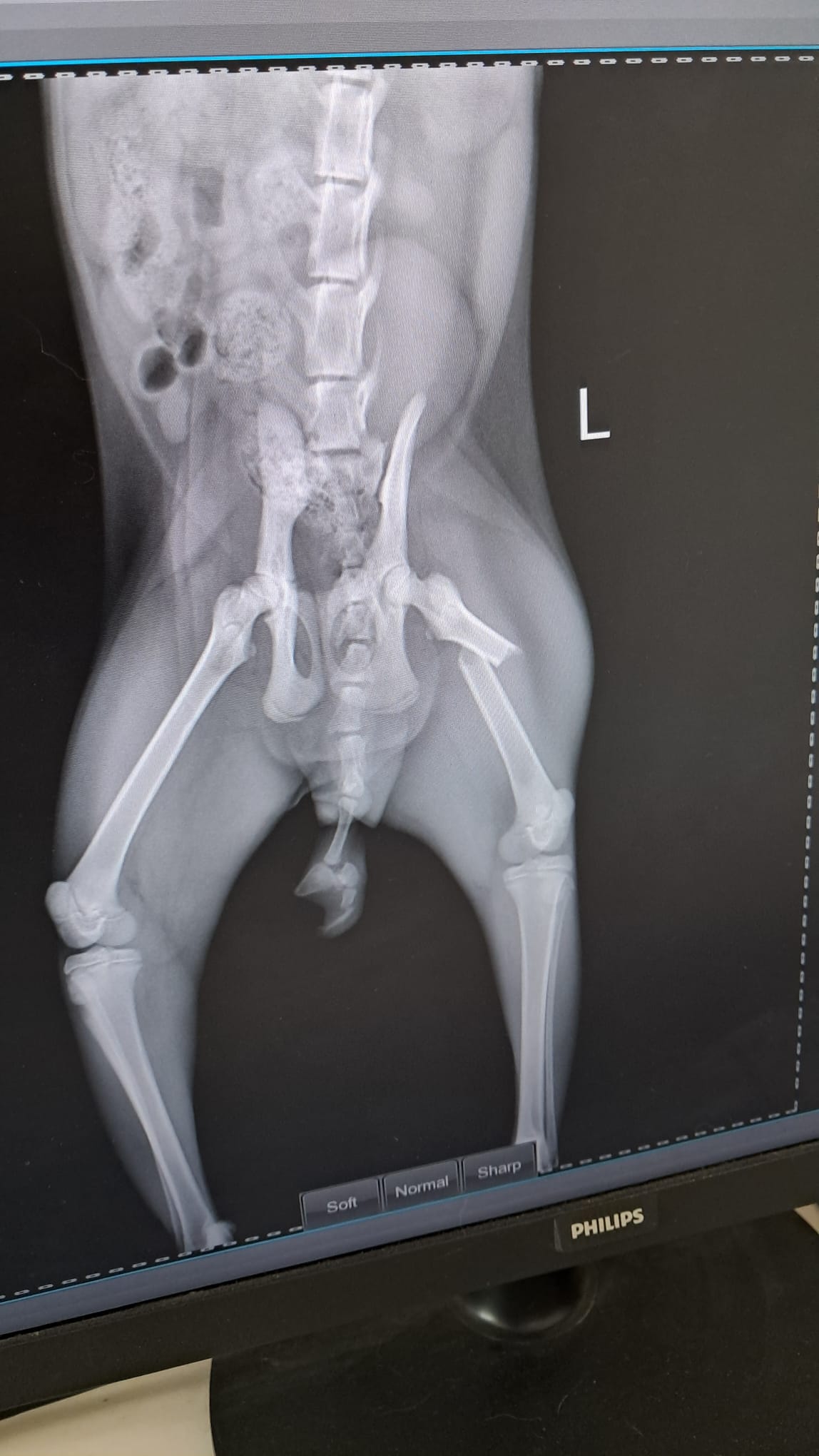
The forecast predicted steady southerly wind to sail 40 NM back up to Carmen, so we set the sails (without starting the engine, emergency use only due to the oil leak…) and rushed goose-winged back up the coast of Cebu. After we arrived in the afternoon our friend Pam, the windvet.com, came out and did a first examination together with Matthias, another friend in the anchorage who had been an orthopedic surgeon for humans before going sailing. They agreed that Squeak needed an x-ray, so we started calling around, but couldn’t find a clinic open on Sunday. On Monday we took Squeak on a quest by taxi and after 3 vet visits in 3 different towns we finally found one with an x-ray and sedation. At this point we were still hoping for just a strained ligament, Squeak had been so brave, hobbling around on 3 legs and moving quite normally, but when the image showed up on the screen, the room went quiet: the femur was not just broken, but completely misaligned.
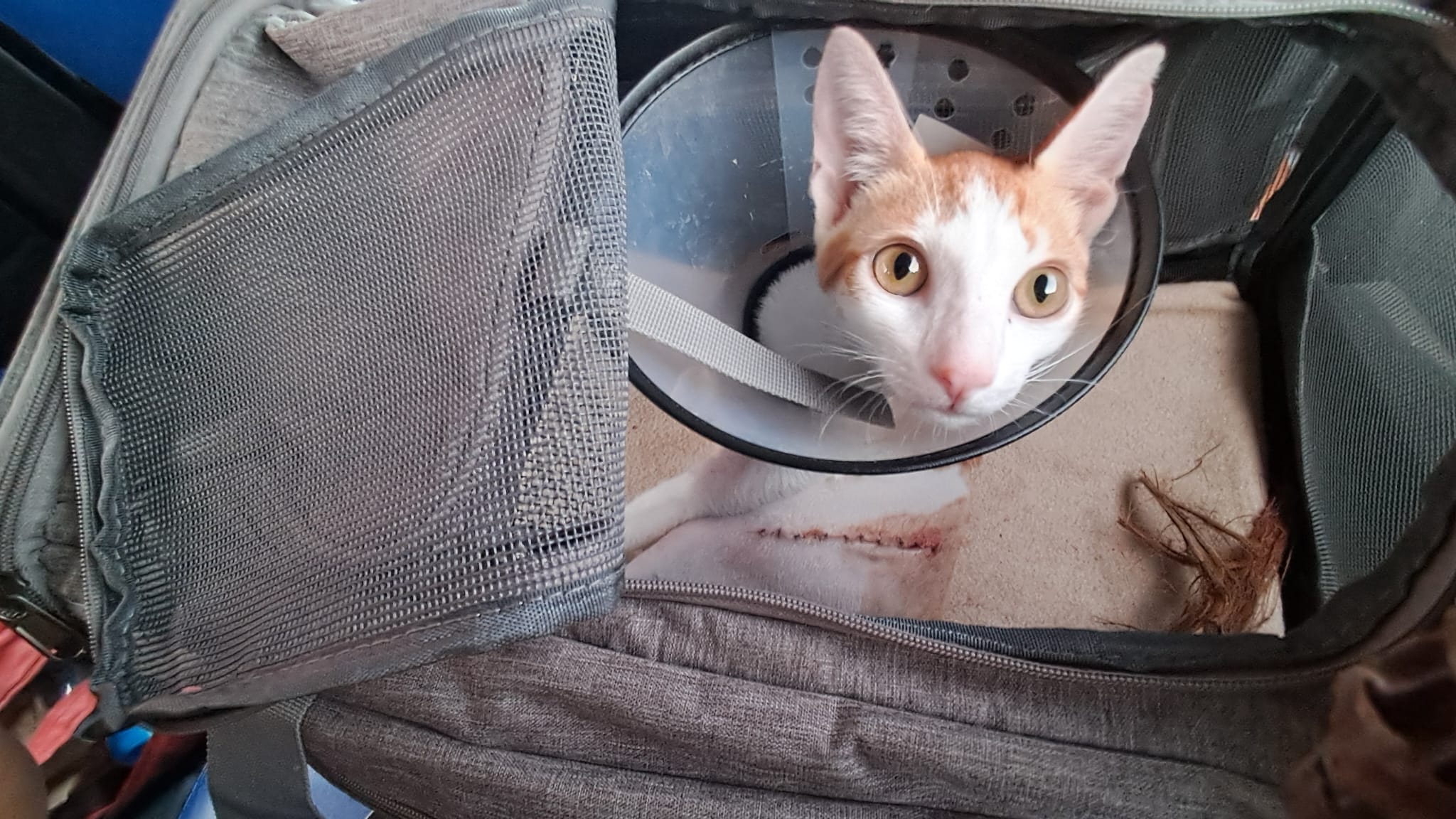
The local vet referred us to an orthopedic surgeon vet in Cebu city, so the day after we rented a car and took the little tomcat to the city and an impressive, ultra-modern, super posh clinic. The very competent seeming vet did a thorough examination, more x-rays, a full blood analysis and agreed to fix the femur with a plate and screws, but not the same day, preparations were to be made and we got an appointment for the next day, Wednesday. He wanted to keep Squeaky at the clinic, but we knew he’d be terrified of all the strangers around, so we took the wretched, shivering Squeak back home–Minnie was waiting desperately, she was so worried about her little Squeak and cleaned him from head to paw to console him before he could even climb out of the transport basket.
No breakfast for Squeak on the next morning, off to town again (with Minnie standing at the railing howling after him) and then we had to leave him at the clinic. In the afternoon finally a phone call: all had gone well, the plate was in, the patient already waking up. They wanted to keep him on an IV for painkillers and antibiotics for 2 days, and on Friday we were finally allowed to get him home (this time I took the bus there for a 3 hour ride and the taxi back, yet another 3 hours in heavy traffic…).
The surgery and hospitalisation cost about 1.300 Euro–more than we would have paid in Europe and definitely more than an average Filipino could ever afford (and to be honest, also more than we could afford after spending all our money in the boatyard).
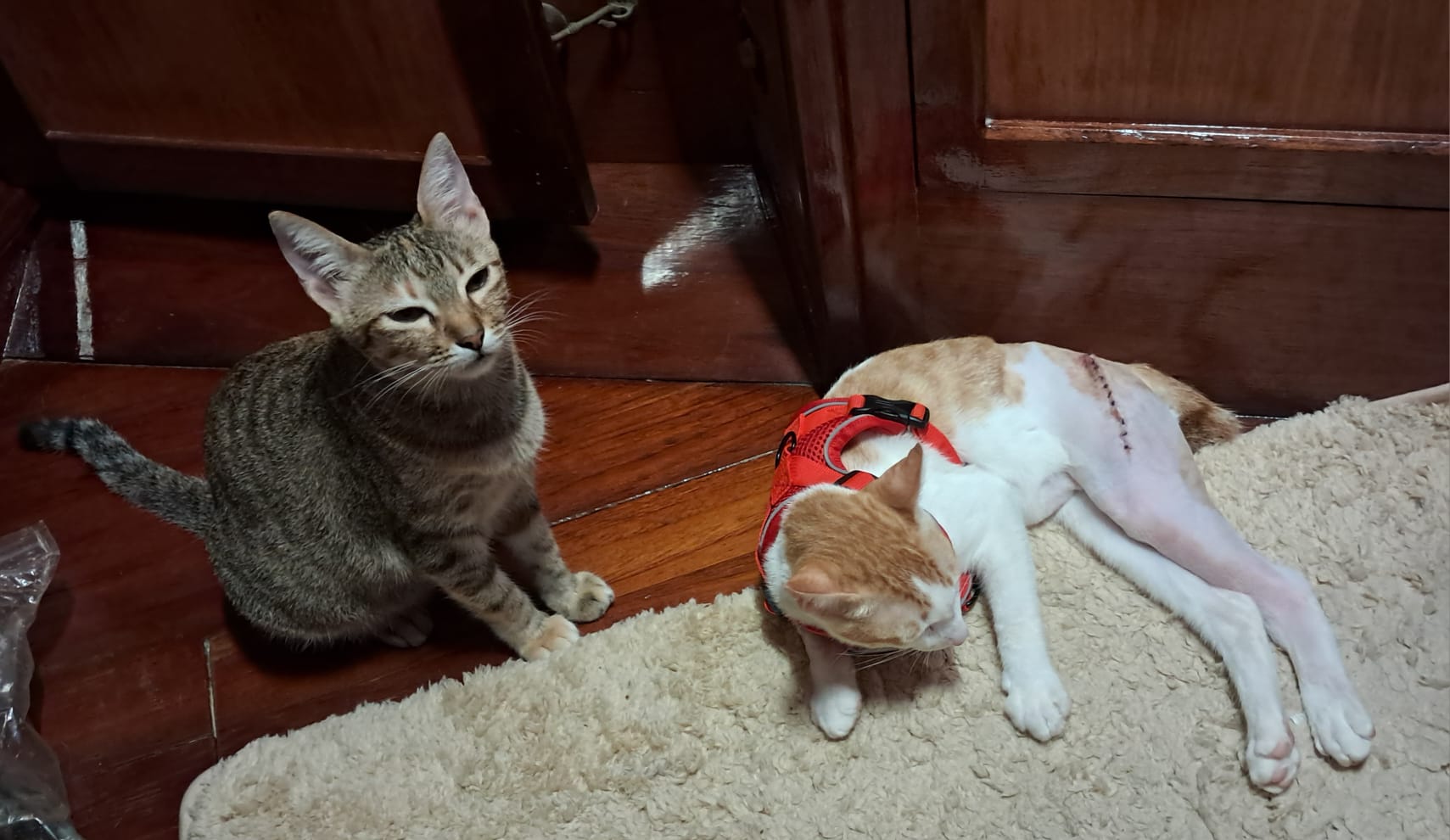
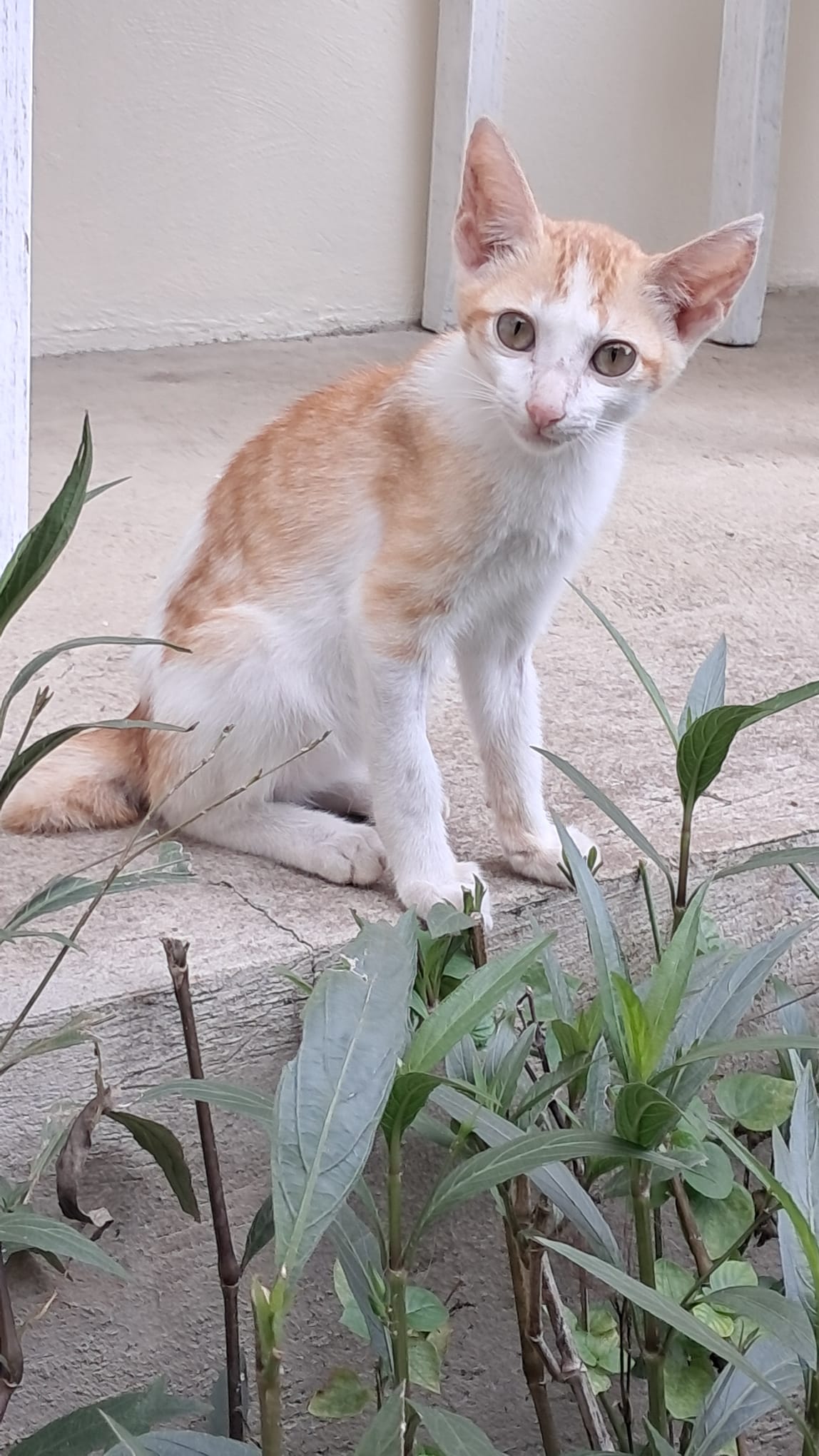
Squeaky is very brave, recovering well a little too well in fact as he is already walking and even running (“just not too fast and don’t bump into things” the vet said) and so we are after him all day to keep the little ginger safe while his bones are mending. He’s eating like a little wolf and fortunately he’s a very patient patient: he watches me filling up a syringe with painkillers and another one with antibiotics each morning and evening and doesn’t run away or protest when I grab his neck to fill his snout with meds… In order to keep him from ripping out his stitches he has to wear a collar (which we take off when he’s eating, washing himself and for playtime in the mornings and evenings) which he endures patiently.
We also bought a plastic crate, thinking that we could put him in there during the night and when we go aboard. Alas, he goes wild when we lock him in. During the first night we put the crate into our bed, but he tried to dig an escape tunnel through the matress… We changed plan and tethered his harness to our bed, so he can sleep between us, but not long enough to jump over the edge and a metre down to the floor… (too high, half a metre is the limit the vet gave us). He’s happy with this arrangement, cuddles up and purrs a lot. He lets us know in the morning when he needs a loo (about 5 in the morning, so an okay time to serve breakfast to all the tigers).
The main risk is our high companionway. He must not jump the 1.60 m down for the next 4 weeks, so we close the hatch when we’re out on deck with the whole pack in the mornings and evenings. The main objective now is to keep little Squeak safe and let him heal. Minnie’s caring for him and showering him with love, Smurfy is cranky and jealous, so we try to give him some extra attention and in the few breaks in between we try to get some boat chores done 
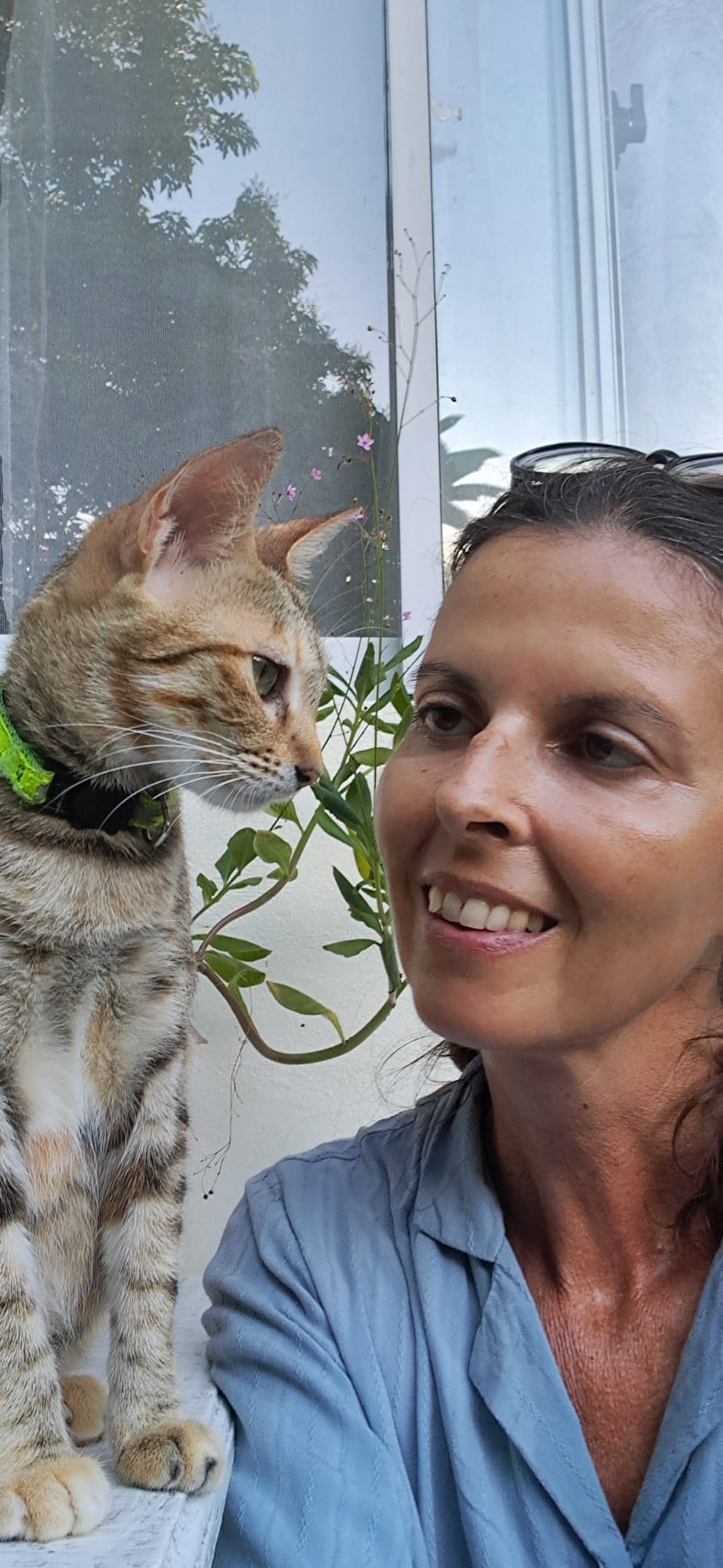
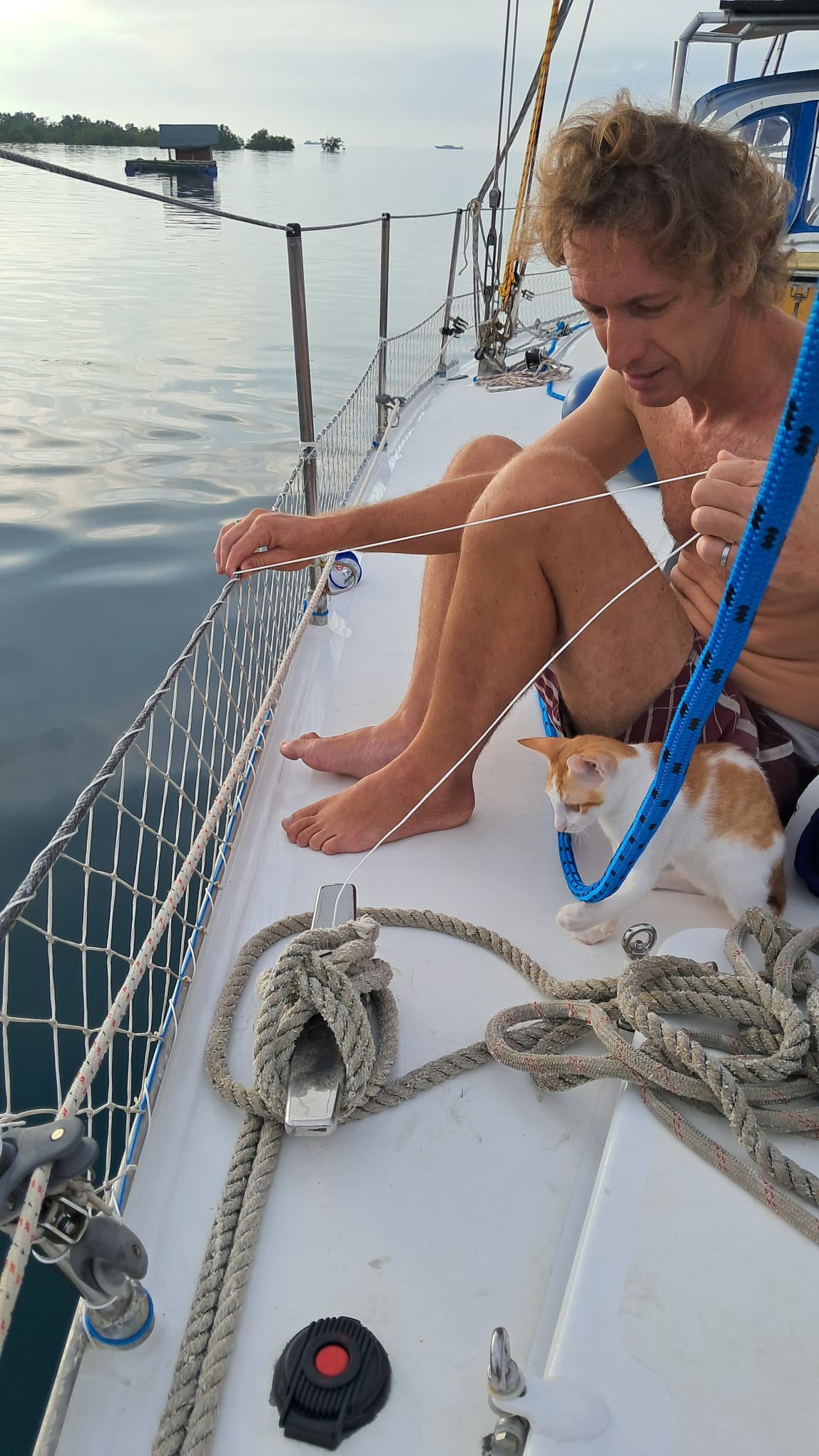
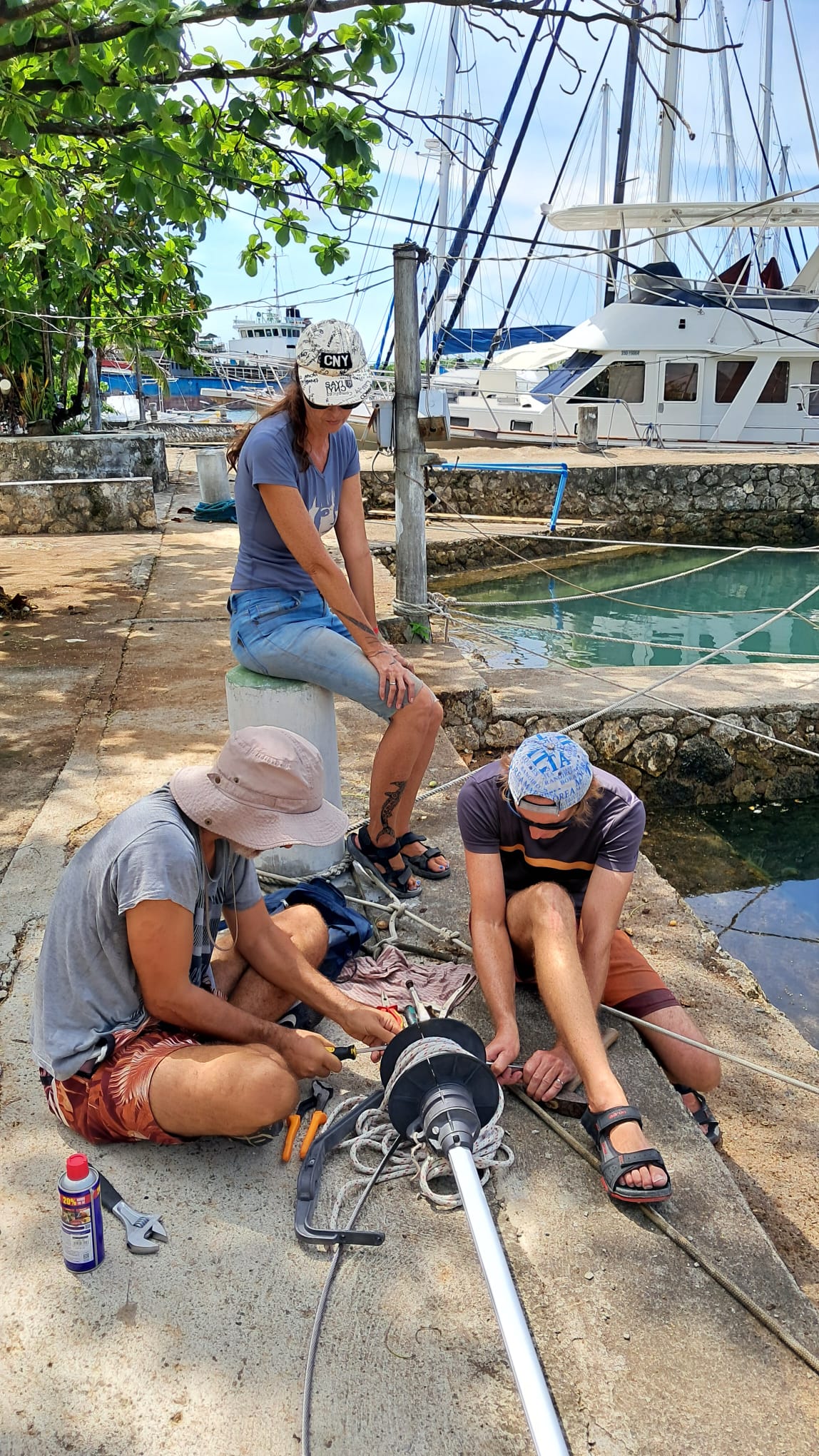
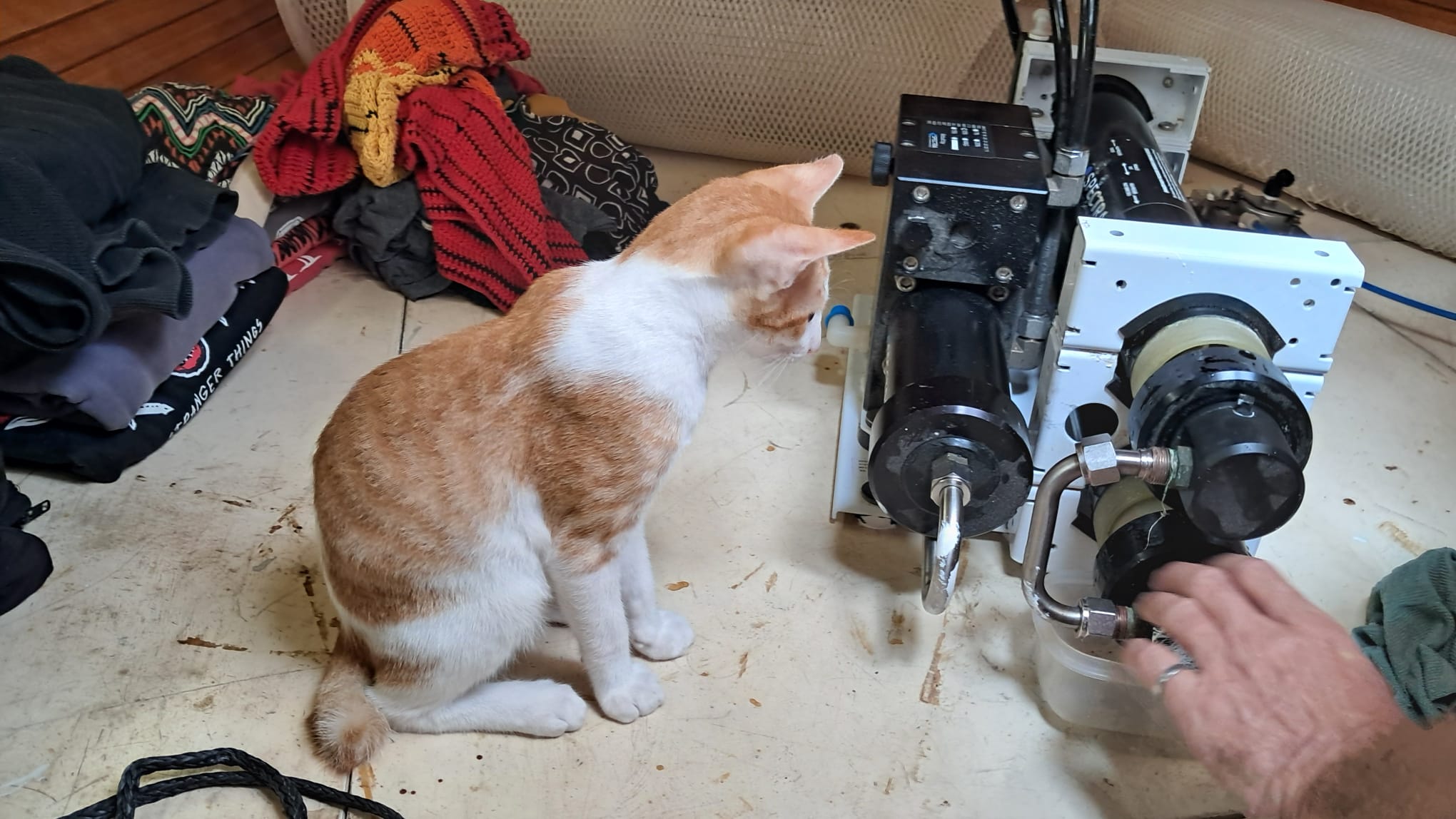
Before the accident: happy sailors and eager helpers
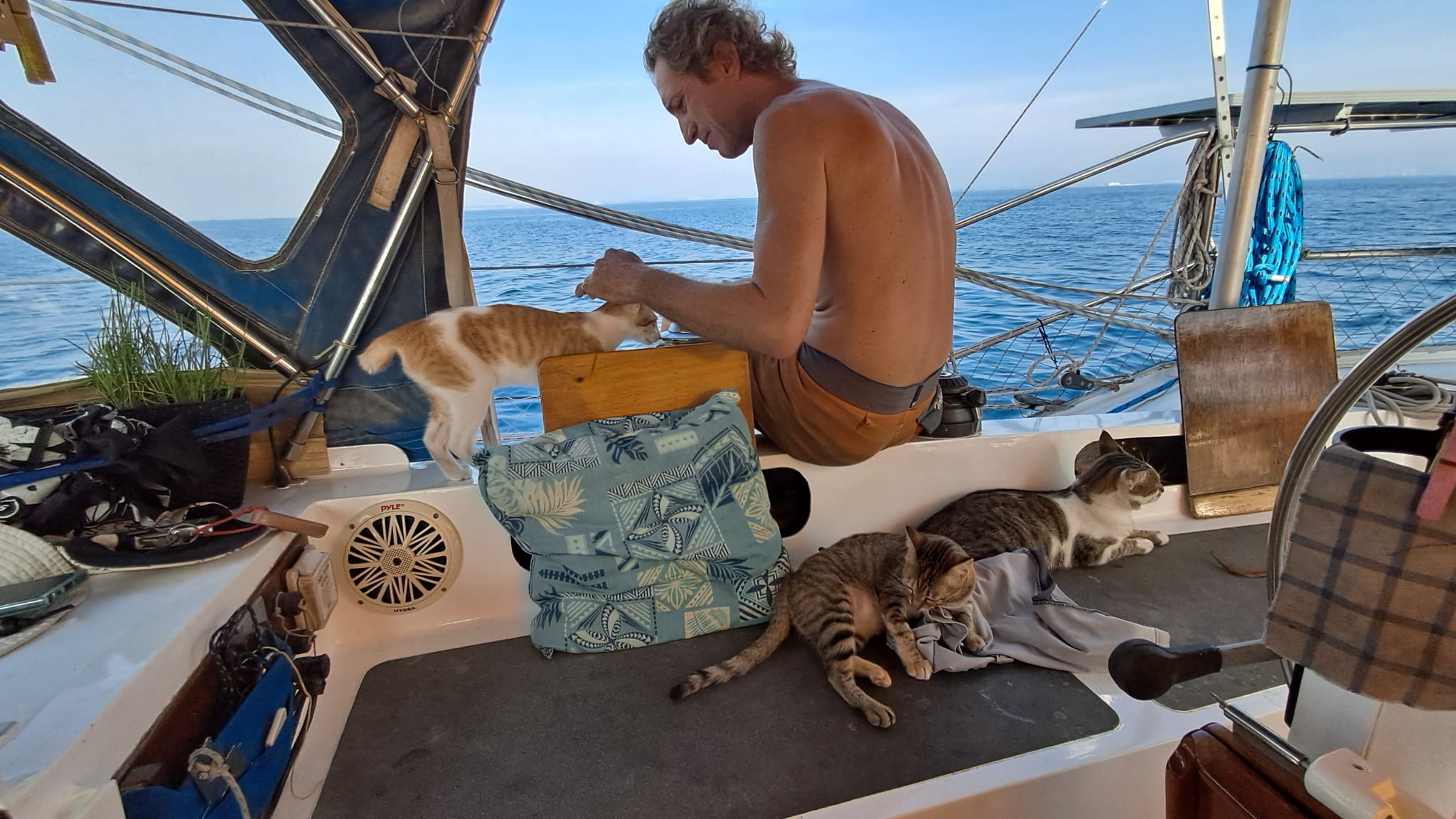
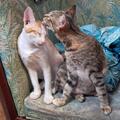
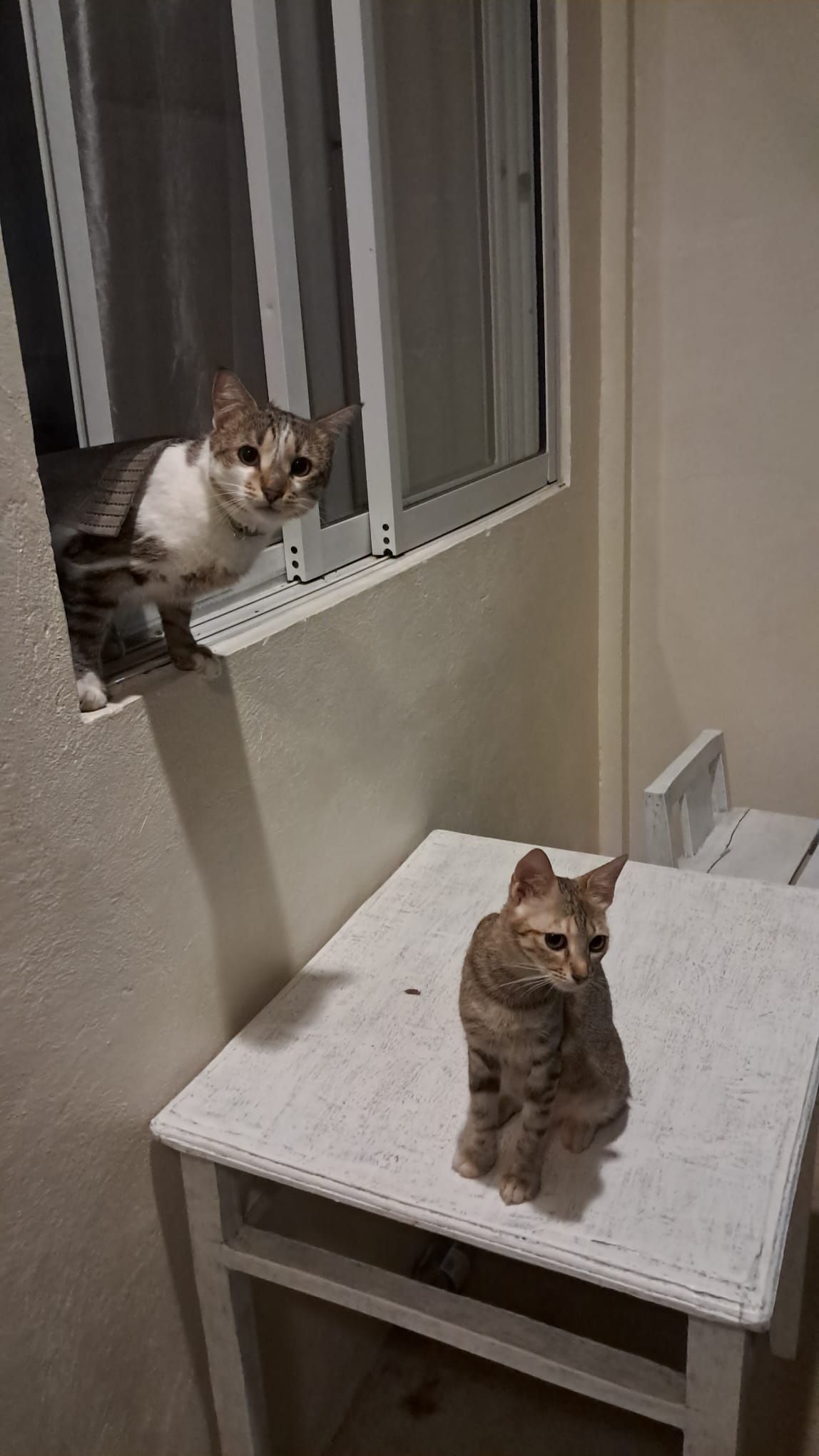
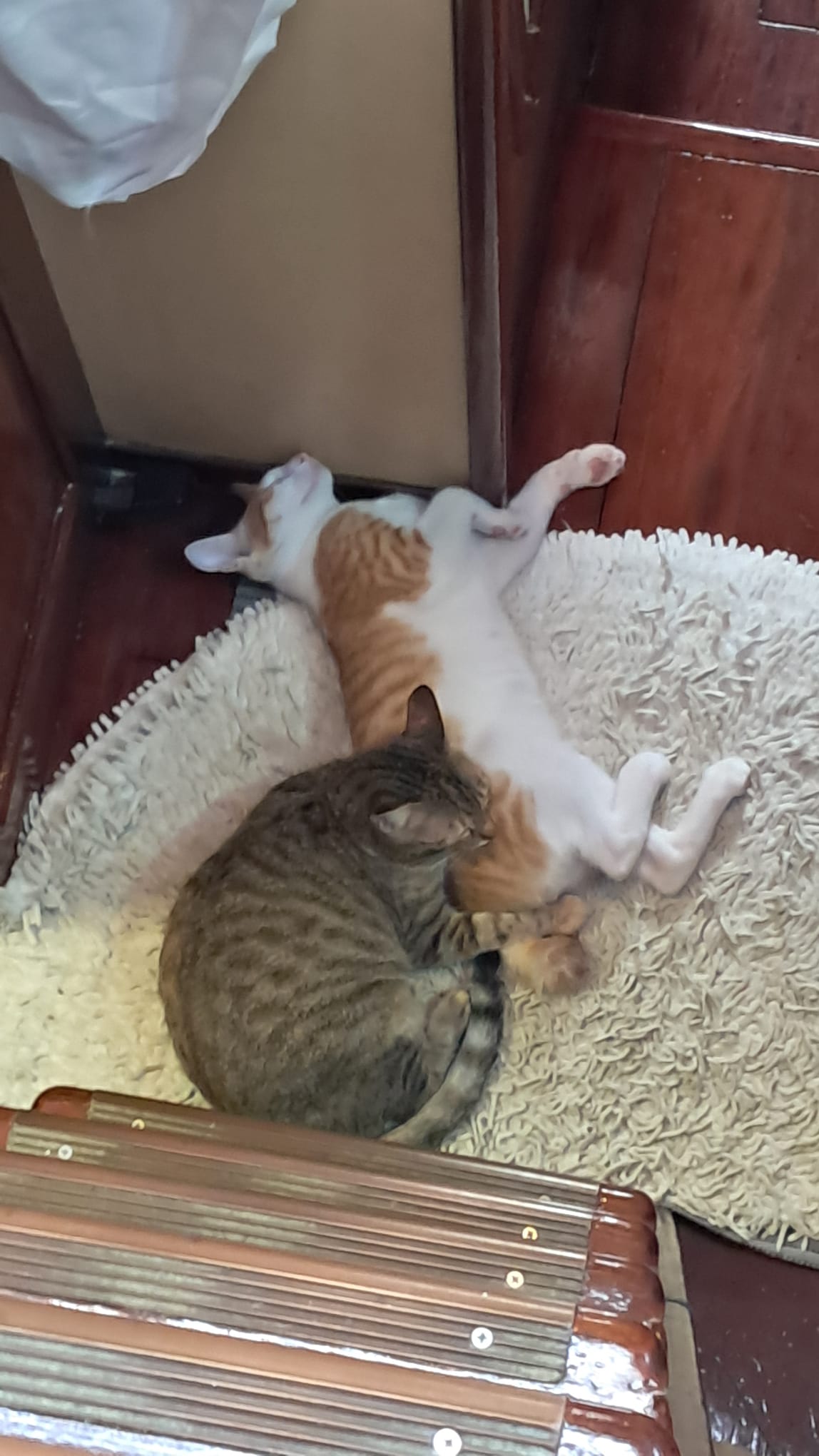
Minnie looking after the injured Squeak while we were sailing:
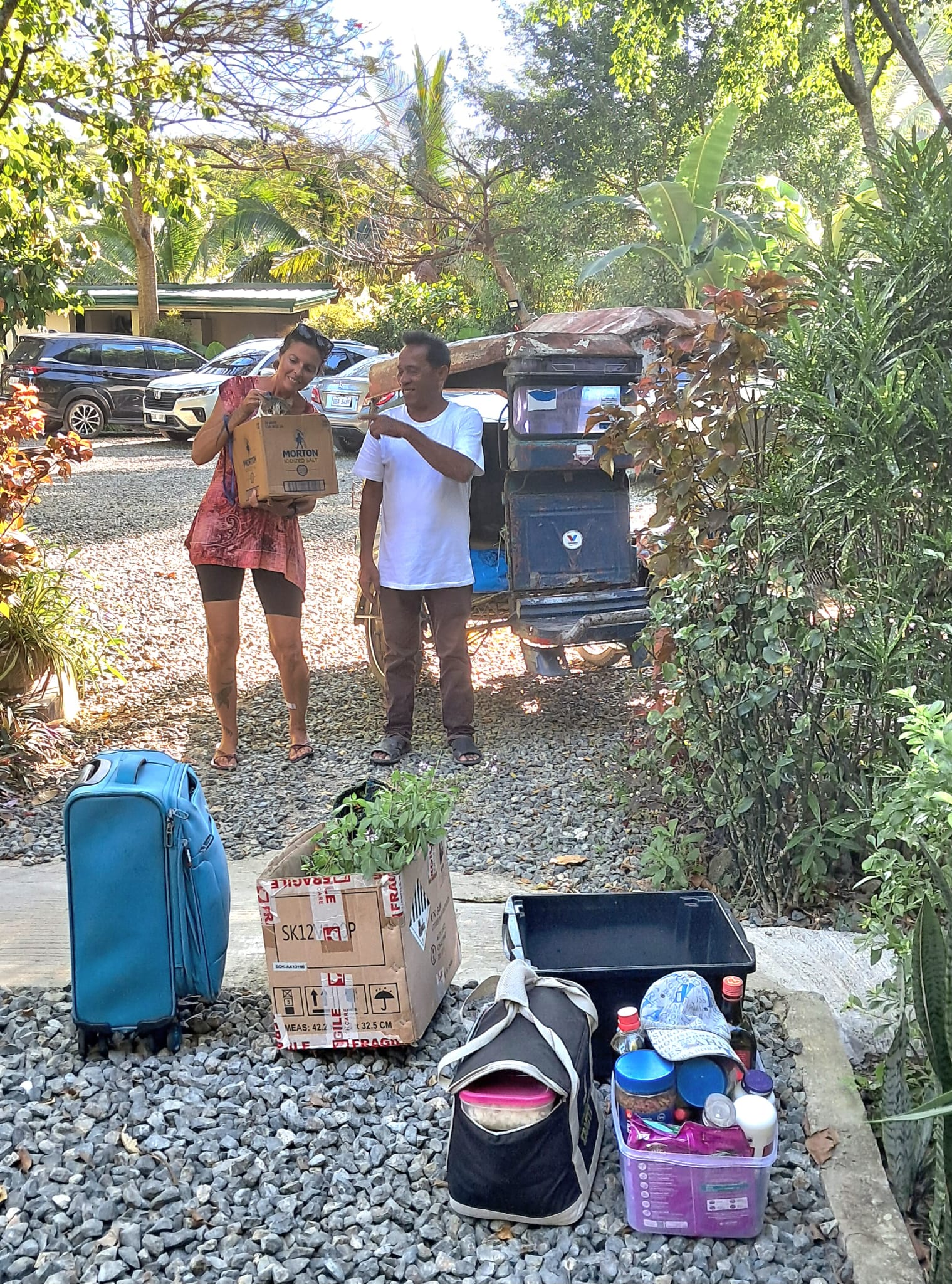
Going to the clinic
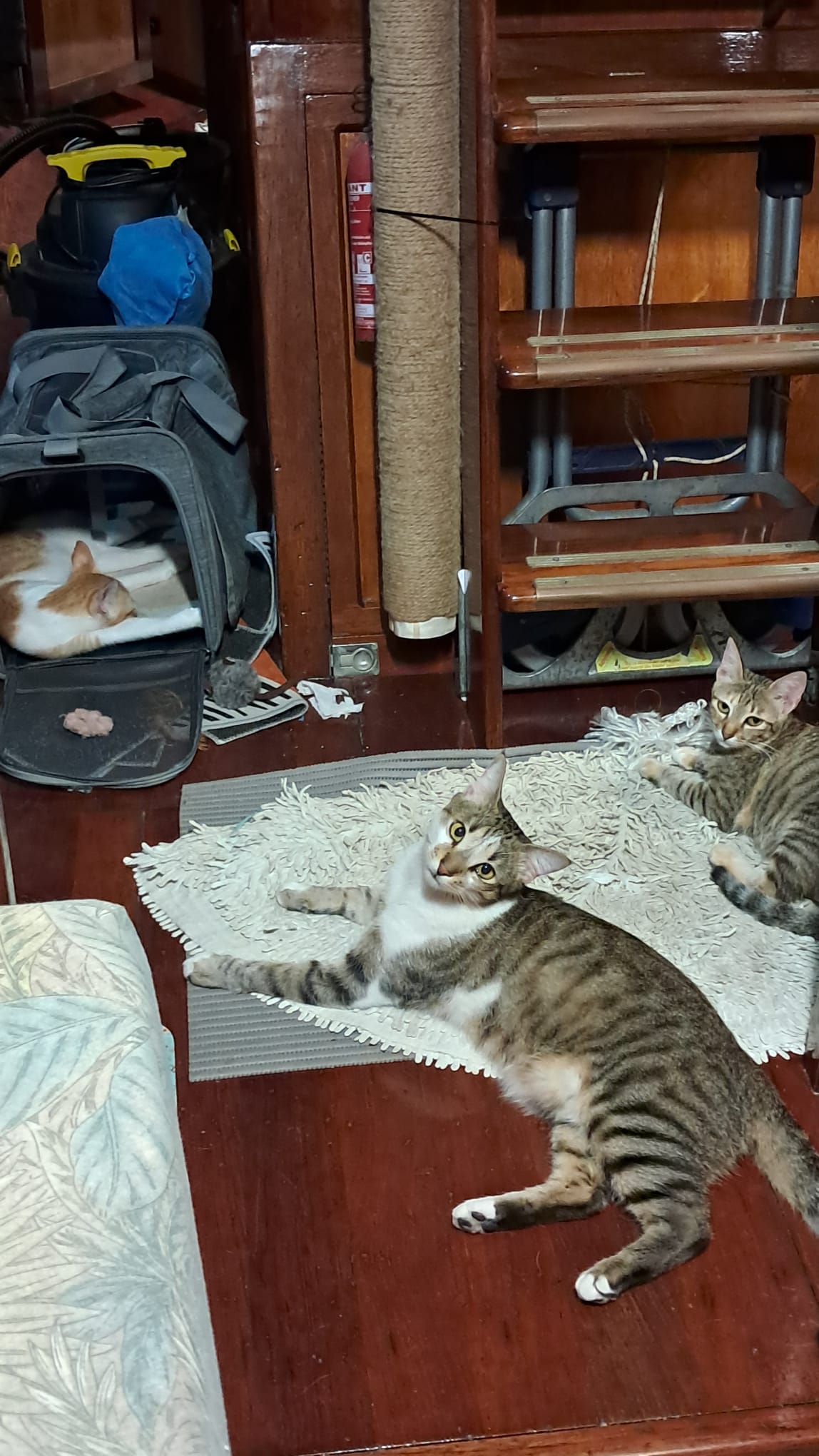
Finally home!