


We’re not much into sailing, to be honest. We don’t enjoy living inside a tumbledryer, getting up every 4 hours to sit out in the cold, sometimes wet cockpit, looking out for hostile freighters eager to sink the boat or even more hostile clouds eager to blow her over. But we endure this to arrive with our cosy home in far-away places, have cat, kitchen, bed, bathroom, etc with us, without ever having to worry about flight delays. Astoundingly many cruisers share this view. Slogans like “We don’t like sailing, but we love arriving”, “sailing’s 90 % boredom, but be content as long as you’re bored, because the other 10 % are scary” are common among people who’ve already spent years living on the sea. We can’t understand what drives people to sail non-stop around the globe, or sail into the roaring 40ies or screaming 50ies (referring to the sound of the wind in the according latitude) far down south–maybe they need the challenge. What we need most at the moment is uninterrupted sleep in a calm anchorage  +++++++++++++ Wir sind keine Segler, wir sind Ankommer Wir segeln ehrlich gesagt nicht sehr gerne. Wir geniessen es nicht, in einem sich drehenden Trockner zu leben, alle 4 Stunde aus dem Schlaf gerissen zu werden, um im kalten, manchmal nassen Cockpit auszuharren, Ausschau haltend nach feindlichen Frachtern, die das Boot versenken, oder noch feindlicheren Wolken, die es umblasen wollen. Aber wir halten das aus, damit wir dann mit unserem gemuetlichen Heim inklusive Katze, Kueche, Bett, Badezimmer, etc. anzukommen, ohne uns je um Flugverspaetungen sorgen zu muessen. Erstaunlich viele Cruiser teilen diese Ansicht. Sprueche wie “Wir segeln nicht gerne, wir kommen nur so gerne an” oder “Segeln ist zu 90 % Prozent Langeweile, aber sei froh so lange dir fad ist, die restlichen 10 % sind Angst” hoert man oft von Leuten, die schon jahrelang auf dem Wasser leben. Wir verstehen nicht, was Leute antreibt, die non-stop um den Globus segeln, oder in die bruellenden 40er oder schreienden 50er (das bezieht sich auf den Klang des Winds auf den entsprechenden Breitengraden) weit unten im Sueden – vielleicht brauchen sie die Herausforderung. Was wir im Moment am meisten brauchen, ist ungestoerter Schlaf an einem ruhigen Ankerplatz
Our Books
Order our books at Amazon
2013
04
May
We’re not sailors, we’re arrivers
2013
04
May
Half the distance done!
Today around noon we passed our half-distance mark.
After a very comfy and quiet first half of the night we passed from dark cloud to dark cloud with gusty wind and drizzle. This morning the sea was high again and confused. It’s a scary view when an especially steep and high blue mountain looms up over Pitufa’s side. It seems certain that the wave will wash over the deck and into the cockpit, but at the last moment Pitufa gracefully lifts and the wave slides harmlessly by–some spit a bit of spray into the cockpit as if angry that they didn’t make it inside.
We know that in Pitufa we have a capable, seaworthy and trustworthy boat. Whenever I get worried when the wind picks up I think back to our very first sailing trip. We had bought Pitufa in Mallorca and sailed her–just the three of us–across the Med to Croatia. Off the coast of Albania the wind increased more and more from the northwest (where we wanted to go), to a point that sailing against the elements became impossible. After fighting for 2 days we hove to, looking the procedure up in our storm tactics book first. As predicted Pitufa turned 50 degrees to the wind with a double reefed mainsail and the rudder working against each other, she stayed in a stable position. We collapsed still in our foul weather gear on the floor in the saloon. After 15 minutes I decided to go up to take a look around, under deck I thought that wind and waves had subsided, it seemed rather calm. Up in the cockpit it became clear that the waves had become even higher and steeper with the wind howling like a girl’s choir in the rigg with 45 knots. I thought I’d pee myself looking up at the steep 4 m waves that tried to crush us, but Pitufa held her bow into the wind, lifted with every slope and let the waves slam sideways into her belly. With a surge of pride in our brave boat I went back under deck, feeling oddly safe and protected in the middle of the gale.
Pitufa’s faithfully carried us around half the world already and now she’s carrying us towards our first south-sea paradise: 1450 nm done 1450 to go!
2013
02
May
Munching our way over the Pacific
Food’s a central topic in the life on Pitufa anyway, but even more during passages. We have a hearty breakfast around 9, a muesli or a salad at noon (hooray, we finished the bananas today, eating about 100 bananas in one week was quite a challenge–who’d have thought that the whole bunch would get ripe so quickly?? we’ll keep away from bananas for a while now…) and an early dinner. Additionally we have some snacks in between, we seem to be munching something most of the time, and when we aren’t we’re usually wondering what to have next. During nightwatches we glut ourselves on dinner left-overs, nuts, pretzels, crisps, wafers, cocoa–nothing’s safe Sounds like we’re putting on some pounds on the passage? Incredibly enough we aren’t. It seems that even though we don’t get much exercise (except for occasional sail changes) our bodies burn up calories just balancing out the constant boat movements and I also think that the regular interruptions of sleep because of the nightwatches mean that the body and all organs never really go on standby, but are always on duty. We’ve had the sails in the second reef during the night again–a safety measure because of the frequent squalls that we’re experiencing. During the day the dark, fast moving clouds are clearly visible and it’s easy to prepare the boat (reefing, securing things), but at night they’re hard to predict. We heard of wind around 45 knots from other boats, but we haven’t had more than 30 yet and not much rain either. Today the wind has shifted further east and we’re now in high, but following waves, which makes life a lot easier. The swell of the Pacific’s still impressive: wide, high mountains of swell come up from storms far away to the south–just imagine, there’s no land to break these waves all the way down to the antarctica… Anyway, 1700 miles to go!++++++++++++ Wir mampfen uns ueber den Pazifik Essen ist immer ein zentrales Thema im Leben auf Pitufa, aber waehrend Ueberfahrten umso mehr. Wir essen um 9 ein herzhaftes Fruehstueck, Mittag ein Muesli oder einen Salat (hurrah, wir haben heute die letzte Banane gegessen, etwa 100 Bananen innerhalb einer Woche zu vernichten war eine ziemliche Herausforderung – wer haette gedacht, dass die ganze Staude so schnell reif werden wuerde?? wir lassen jetzt eine Weile die Finger von Banenen…) und ein fruehes Abendessen. Zusaetzlich snacken wir zwischendurch, eigentlich pampfen wir die meiste Zeit irgendwas und wenn wir grad nix im Mund haben, denken wir garantiert nach, auf was wir als naechstes einen Gusta haben. Waehrend den Nachtwachen stopfen wir uns mit Abendessenueberbleibseln, Nuessen, Brezeln, Chips, Waffeln, Kakao voll – nix ist sicher Klingt als ob wir einige Kilos zulegen? Erstaunlicherweise ist dem nicht so. Obwohl wir kaum Bewegung bekommen (abgesehen von Segelwechseln) verbrennen unsere Koerper die Kalorien nur beim staendigen Ausgleichen der Bootssbewegungen, ich glaub ausserdem, dass unsere Koerper wegen der staendigen Schlafunterbrechungen nie wirklich zur Ruhe kommen, die Organe arbeiten immer. Letzte Nacht hatten wir die Segel wieder im zweiten Reff – eine Sicherheitsmassnahme wegen der regelmaessigen Squalls (Schauerboen), die ueber uns wegziehen. Am Tag sieht man die schwarzen, schnellziehenden Wolken rechtzeitig, kann Segel reduzieren und das Boot vorbereiten, aber nachts sind sie schwer vorherzusehen. Wir haben von anderen Booten gehoert, dass sie Wind um die 45 Knoten hatten, wir haben nicht mehr als 30 erlebt und auch wenig Regen abbekommen. Heute ist der Wind oestlicher und wir haben hohe, aber folgende Wellen, was das Leben gleich leichter macht. Die Pazifikduenung ist nach wie vor eindrucksvoll: lange, hohe Bergketten ziehen von Sueden herauf, wo sie in Stuermen weit weg entstanden sind – man stelle sich vor, auf der ganzen Stecke von der Antarktis herauf bremst kein Land bremst diese Wellen… Wie auch immer, 1700 Seemeilen sind es noch.
2013
29
Apr
2000 nautical miles to go!
After just a week we’ve almost made one third of the distance–only a bit more than the distance of our Atlantic crossing is missing, but while we had to hand-steer on the Atlantic, here we just watch our windvane Wayne Vaney do all the steering. We’ve had two rough days with lots of squalls and strong winds intercepted by annoying calms during which Pitufa rolls violently in the high swell, the sails flap and bang, it sounds as if the whole boat was falling apart… We hope for more settled weather now, to get a bit more sleep next night.+++++ Noch 2000 Seemeilen! Nach einer Woche haben wir schon fast ein Drittel der Distanz geschafft – es bleibt fast nur noch die Distanz unserer Atlantikueberquerung, doch waehrend wir auf dem Atlantik Handsteuern mussten, koennen wir nun unserer Windsteueranlage Wayne Vaney beim Steuern zusehen. Wir haben zwei rauhe Tage hinter uns mit vielen Schauerboen und Starkwind, unterbrochen von nervigen Flauten waehrend denen Pitufa heftig in der hohen Duenung rollt, die Segel flappen und schlagen und es klingt als ob das ganze Boot auseinanderfaellt… Wir hoffen auf stabileres Wetter, um heute Nacht ein bissl mehr Schlaf zusammenzubringen.
2013
27
Apr
Life on a slant
While cruising through the Med, crossing the Atlantic and cruising through the Caribbean we kept adding little improvements to make life on passage easier (locked floorboards, sliders to secure drawers, etc.), but most of our sailing until now was downwind, with Pitufa gliding down waves and rolling. On this passage we now have the wind on the beam, as soon as it picks up (like this afternoon) this means that we’re heeling constantly to the starboard side. That makes sleeping easier, because the sea berth is on the starboard side, so we can curl up leaning against the wall. Bathroom and kitchen are unfortunately up on the slope on the port side. The loo could easily become an ejector seat, so it’s advisable to lean with one hand forward against the wall, stretching the other elbow back to fend of the toilet lid in case of an attack. So far so safe, but at some point you’ll want to pull up your trousers again and then it’s advisable to wait for exactly the right moment, or hit ting the wall face first… Cooking’s also adventurous, our gimbaled stove behaved like a bucking horse and is now slowed down with a rubberband. Theoretically the cook should always hold on to the boat with one hand (try cooking onehanded…) and getting things out of the cupboard can only be achieved at a quiet moment: slam open the cupboard, grab required utensil and slam the cupboard back shut before herbs, plates and glasses get airborn. At least Pitufa’s making fast progress this way, we’ve already covered one fifth of the distance!++++ Schraeges Leben. Waehrend wir durchs Mittelmeer, ueber den Atlantik und durch die Karibik gesegelt sind, haben wir immer kleine Verbesserungen an Pitufa vorgenommen, um das Leben auf See angenehmer zu gestalten (verriegelte Bodenbretter, Schieber vor den Schubladen, etc.), aber bis jetzt sind wir fast immer vor dem Wind gesegelt, Pitufa glitt die Wellen hinunter und rollte dabei hin und her. Auf diesem Toern haben wir den Wind von der Seite, sobald er staerker wird (wie heute Nachmittag) bedeutet das, dass wir konstant nach Steuerbord kraengen. Schlafen wird dadurch einfacher, weil die Seekoje auf der Steuerbordseite liegt, somit rollt man sich einfach an die Wand gelehnt zusammen und liegt stabil. Bad und Kueche liegen leider auf der Bergseite Backbord. Das Klo wird so leicht zum Schleudersitz, es ist ratsam sich mit einer Hand gegen die Wand zu stuetzen, den anderen Ellbogen zur Abwehr des attackierenden Klodeckels nach hinten gestreckt. So weit so sicher. Irgendwann muss man aber die Hose wieder raufziehen und dann wird’s gefaehrlich. Sucht man nicht den richtigen Moment aus, klatscht man leicht mit dem Gesicht voraus an die Wand. Kochen ist auch abenteuerlich, unser kardanisch aufgehaengter Herd verhielt sich wie ein bockendes Pferd und wird jetzt mit einem Expander gebremst. Theoretisch braucht der Koch immer eine Hand fuer’s Boot, aber einhaendig kochen bleibt graue Theorie. Sachen aus dem Kastl nehmen erfordert gutes Timing: reiss das Kastl auf, schnapp das erforderliche Utensil, knall das Kastl schnell zu noch bevor Kraeuter, Glaeser und Teller rausfliegen. Zumindest kommt Pitufa so schnell voran, wir haben schon ein Fuenftel der Distanz!
2013
26
Apr
Pitufa out on the blue disc
Once again the earth is a blue disk and the sky its blue lid. The perfect deep azure of the Pacific is only dotted with occasional whitecaps today, the wind is lighter and progress slower, but also more comfortable. Looking at the chart it seems incredible how far away and far apart islands are spreads on the gigantic width of the Pacific. We haven’t seen any wildlife since we’ve left the Galapagos (and miss the sealions), but we know we’re not alone out here. Yesterday a fishing boat passed us close by, eager to chat on the radio, later on a freighter came close as well. Like on the trip to the Galapagos we check in on an SSB radio net and so we know that 20 yachts have set out in the seem week as we have, most of them are bound to the Marquesas, 2 want to go to Hawaii and only 3 others are headed for the Gambier as we are. The route to the Marquesas is more common and more convenient, but we prefer–as usually–to stay off the beaten track. We’ve finally had a lazy day with out fishing or fish preparation +++++ Die Erde ist wieder einmal eine blaue Scheibe und der Himmel ihr blauer Deckel. Das perfekte Azur des Pazifik wird nur von einigen Schaumkronen unterbrochen, der Wind ist weniger und wir kommen langsamer, aber auch gemuetlicher voran. Bei einem Blick auf die Karte scheint es unglaublich, wie weit weg und weit auseinander die Inseln auf der gigantischen Weite des Pazifik auseinanderliegen. Wir haben keine Tiere gesehen, seit wir von den Galapagos weg sind (und vermissen die Seeloewen, aber wir wissen, dass wir nicht alleine hier draussen sind. Gestern ist ein Fischerboot ganz nah gekommen und wollte am Funk ratschen, spaeter haben wir auch einen Frachter gesehen. Wie auf der Reise zu den Galapagos checken wir in ein SSB-Funknetz ein und so wissen wir, dass 20 andere Jachten in der gleiche Woche losgesegelt sind, die meisten mit dem Ziel Marquesas, 2 Richtung Hawaii und nur 3 andere wollen zu den Gambier so wie wir. Die Route zu den Marquesas ist ueblicher und einfacher, aber w ir wollen – wie ueblich – abseits von den ausgetretenen Routen bleiben. Wir haben heute endlich einmal einen Faultag ohne Angeln oder Fischzubereitung
2013
24
Apr
Quick start
We’ve had a fresh breeze and more than 1 knot of current helping us along on the first day and Pitufa’s flying along with 7 to 8 knots and the wind on her beam. After last-minute shopping, clearing up the boat and preparing for the passage we were actually looking forward to some days of lazy reading on the passage but life on passage turned out to be just as stressful as life on land. We caught a blackfin tuna of such dimensions that we decided to put some in jars for later on. After cutting up pieces for more than an hour we finally had 3 jars in the pressure cooker (first time we try this), but just as pressure was building up the flame went out–we had forgotten to fill up the kerosene tank (which we usually always do before a longer passage). Filling up kerosene on a rocking boat was quite a challenge, but it seems we need that, because in the end we spilled less than in calm conditions. After 3 hours the procedure was finally done and we now have our first selfmade cann ed tuna  +++++++++++++ Wir haben seit gestern eine frische Brise und mehr als 1 Knoten Stroemung, somit fliegt Pitufa mit 7 bis 8 Knoten mit dem Wind von der Seite dahin. Nach dem last-minute Einkaeufen, Klarieren, Vorbereiten, hatten wir uns ehrlich gesagt auf faule Lesetage auf der Ueberfahrt gefreut, aber das Leben auf See ist bis jetzt genauso stressig wie das Leben an Land. Wir haben einen derart riesigen Schwarzflossenthunfisch gefangen, dass wir beschlossen, einen Teil davon einzurexen. Nachdem ich eine Stunde lang Stueckerl hergeschnitten hatte, packten wir drei Glaeser in den Druckkochtopf (Erstversuch), aber gerade als sich Druck aufbaute, ging die Flamme aus – wir hatten vergessen Kerosin nachzufuellen (machen wir sonst immer vor einem laengeren Toern). Kerosin auf einem bockenden Schaukelboot einzufuellen war eine ziemliche Herausforderung, aber scheinbar brauchen wir genau das, wir haben naemlich weniger gepatzt als unter ruhigen Buchtbedingungen sonst. Nach drei Stunden war die Prozed ur abgeschlossen und wir haben unsere ersten, selbstgemachten Thunfischkonserven
2013
23
Apr
Pitufa on the way to French Polynesia
We are sailing from Isabela (Galapagos) towards the Gambier Islands in the South of French Polynesia. 3000 nautical miles seem like an incredibly long distance, we hope for fair winds and smooth seas on the way and will hopefully arrive in about 3 to 4 weeks.
2013
22
Apr
Photos of Isabela, Galapagos
Just in time!
Isla Isabela, Galapagos
In April 2013 we spent three weeks on Isabela, the largest of the Galapagos Islands. Even though yachties have to pay horrendous sums to be allowed to stay here, the incredible wildlife and the spectacular scenery made it worth it.
(50 photos)
2013
19
Apr
Preparations for The Long Passage
We’re still having a good time on Isabela. Yesterday we joined a hiking group and spent 5 hours walking past the gigantic 10 km wide crater of the volcano Sierra Negra and through the caldera of Volcano Chico with impressive lava tunnels and flows of different ages and colours giving evidence of the stages in which plants manage to settle on the craggy inhospitable volcanic slopes.
This morning the sea lions, penguins, pelicans and boobies gave an extra lively show around the boat and I couldn’t resist, put on my mask and snorkel and joined them. It’s fascinating to see how graceful and quick the plump sea lions maneuver under water, dart after fish and happily munch them floating on their backs.
We’re planning to leave after the weekend and are busy buying veggies, checking engine, rigg, sails, etc. Everybody seems to have the same concerns before the passage and this morning 3 of our neighbours climbed up the mast to check everything, later on a few started scrubbing the hulls (something we still have to do). For most crews the impending passage to French Polynesia is going to be the longest they’ve ever done (very few boats here have already been around the Pacific or the world and are on their second visit to this area). Despite the fact that we’re all preparing to spend 3 to 4 weeks on the ocean the general atmosphere is very positive, info’s exchanged, plans are being made and remade while chatting with other cruisers at the many social events that are organised (today’s potluck on the beach at 5, everybody brings booze and a meal to share) and everybody’s looking forward to reaching Polynesia.
2013
18
Apr
Cruising Info on Panama
Check out our notes about Cruising in Panama (Anchorages in Kuna Yala, Las Perlas, Darien; Navigation Dangers, Tips, etc.) under Destinations in the Menu or click here.
2013
15
Apr
Another Article in OCEAN7 Magazine
Birgit’s article on the southern Caribbean has been published in the current issue (May/June) of the Austrian sailing magazine OCEAN7.
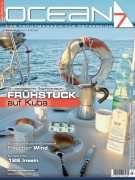
Birgit Hackl, Christian Feldbauer: Durch die südliche Karibik, OCEAN7 03 (Mai/Juni) 2013, p. 24–31. download PDF (in German only)
2013
12
Apr
Incredible wildlife in Galapagos
We’ve been on Isabela for more than a week now (out of the 20 days we’re allowed to stay) and are still every morning yet again fascinated by all the animals that come by. Boobies crashland into the water with a loud POFF, dive down to catch a fish and pop up again next to the boat. Next to them sealions drift with their bellies up in the morning sun and even some penguins mingle in. We get up at sunrise and enjoy the spectacle–only Leeloo thinks it’s scary to have so many monsters snorting and splashing next to the boat.
We did a cycle tour along the coast and saw dozens of tortoises just next to the path and sea iguanas diving grazefully in tidal ponds. The dive tour we joined was also fascinating: turtles, sea lions, hammerhead sharks, white tip reef sharks, large groups of barracudas and even a manta ray.
2013
07
Apr
Some pics from our trip to the Galapagos

Sailing to the Galapagos islands
At the end of March 2013, we left the Darien of Panama and finally sailed out into the Pacific. It took us 8 days to sail the 950 nautical miles.
(10 photos)
2013
07
Apr
Leisure-time stress
Puerto Villamil on Isabela is a picture-book anchorage: sparkling turquoise waters, black volcanic rocks surround the bay almost entirely and give good protection. Behind that light-green hills rise to volcano craters. The seas around the Galapagos are incredibly lively: rays jump, dolphins play around the bow, birds splash into swarms of fish and on the way into the bay we were accompanied by playful sea-lions, who are also sunbathing on the sterns of the fishing boats and on the jetty. This morning a little penguin was hunting fish right next to Pitufa and boobies make quite a spectacle swooping straight down from about 50 meters, splashing into the sea loudly and popping up again like corks. The drawback is that the Ecuadorian government makes visiting the islands almost impossible because of the exorbitant prices: 500 dollars for 20 days, next years prices will rise even higher. This payment only allows you to anchor in one bay, exploring without a guide is forbidden and guided tours are incredibly pricy.
Since we got here we’ve been really busy, but in a positive way. Right after our arrival we invited our friends from Iolea over to help us eating the 10 kilo tuna we caught on the way in (we still had enough for another 3 days…). On the day after about 20 cruisers organised a trip to a restaurant further inland and we also had to deal with paperwork. Now we’ve finally found the time to fix the kerosene stove and to clean Pitufa’s overgrown waterline.